One of the most fascinating things about ceramics is that glaze rarely looks exactly the same before and after firing.
A glaze is made from a mixture of materials which, when fired, melt and form a glass-like surface on the ceramic. Before firing, it can look chalky, powdery, dull or completely different from the colour you expected.
Heat changes everything.
The final result can be influenced by the glaze itself, the thickness of the application, the clay underneath, the firing temperature and even what is happening elsewhere inside the kiln.
This is why potters make test tiles and experiment constantly. A tiny change in application or firing can produce a completely different surface.
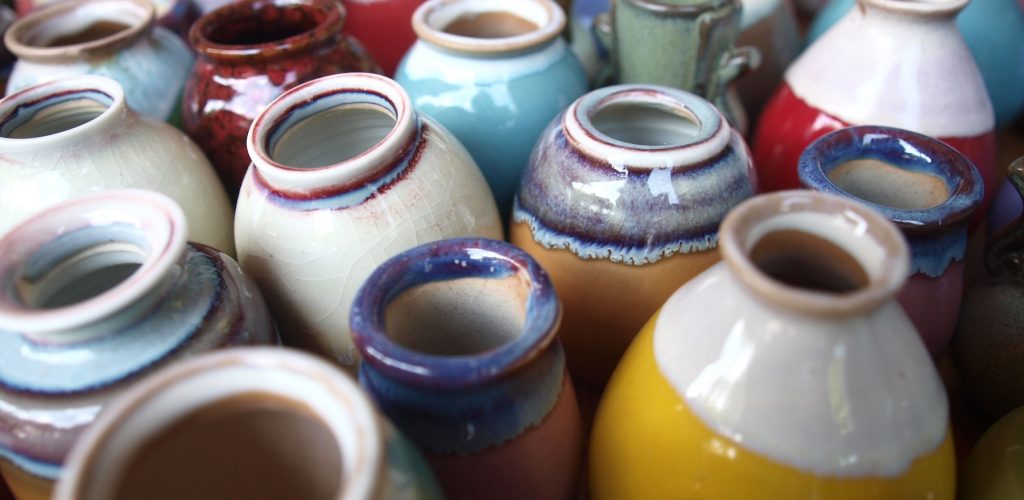
Some glazes are smooth and glossy, others are matt, speckled, textured or full of movement.
And sometimes a glaze does something completely unexpected — which is both the frustration and the joy of being a potter.
You can plan a glaze. But you don’t always get to control it.