
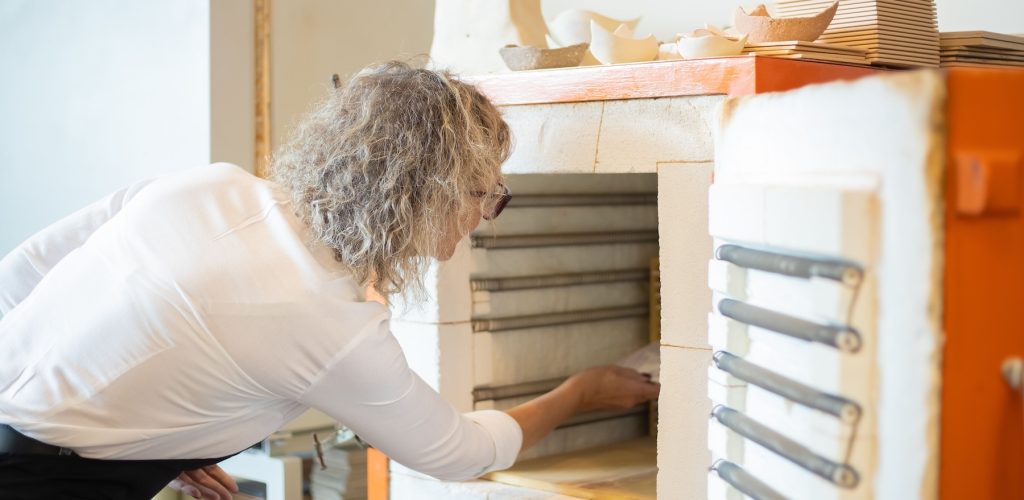
A kiln might look like a rather large, very hot cupboard, but it is where some of the biggest transformations in pottery take place.
Once a pot has been made, it needs to dry completely before it can go into the kiln. The first firing, known as a bisque firing, removes remaining moisture and changes the clay into a hard, durable ceramic material. At this stage it is still porous and ready to receive glaze.
The second firing is where things get particularly exciting. Glazes melt and react with the ceramic surface, creating the colours, textures and finishes we see on the finished piece.
Kilns can reach temperatures of well over 1,000°C, depending on the type of clay and glaze being used. And pottery can’t simply be taken out when the firing finishes — the kiln needs to cool gradually.
For potters, opening a kiln can be one of the most exciting parts of the process. Even when you’ve made the same piece before, there can be little surprises waiting inside.
Clay goes in. Something completely transformed comes out.